A horse can be the strongest finisher in the field and still lose because the home straight is short and the early pace was a crawl. The same horse can win comfortably at a different course, where the run to the line is twice as long and a true gallop takes the sting out of the front runners. Same horse, same rating, same trainer. The course may have done a good share of the work.
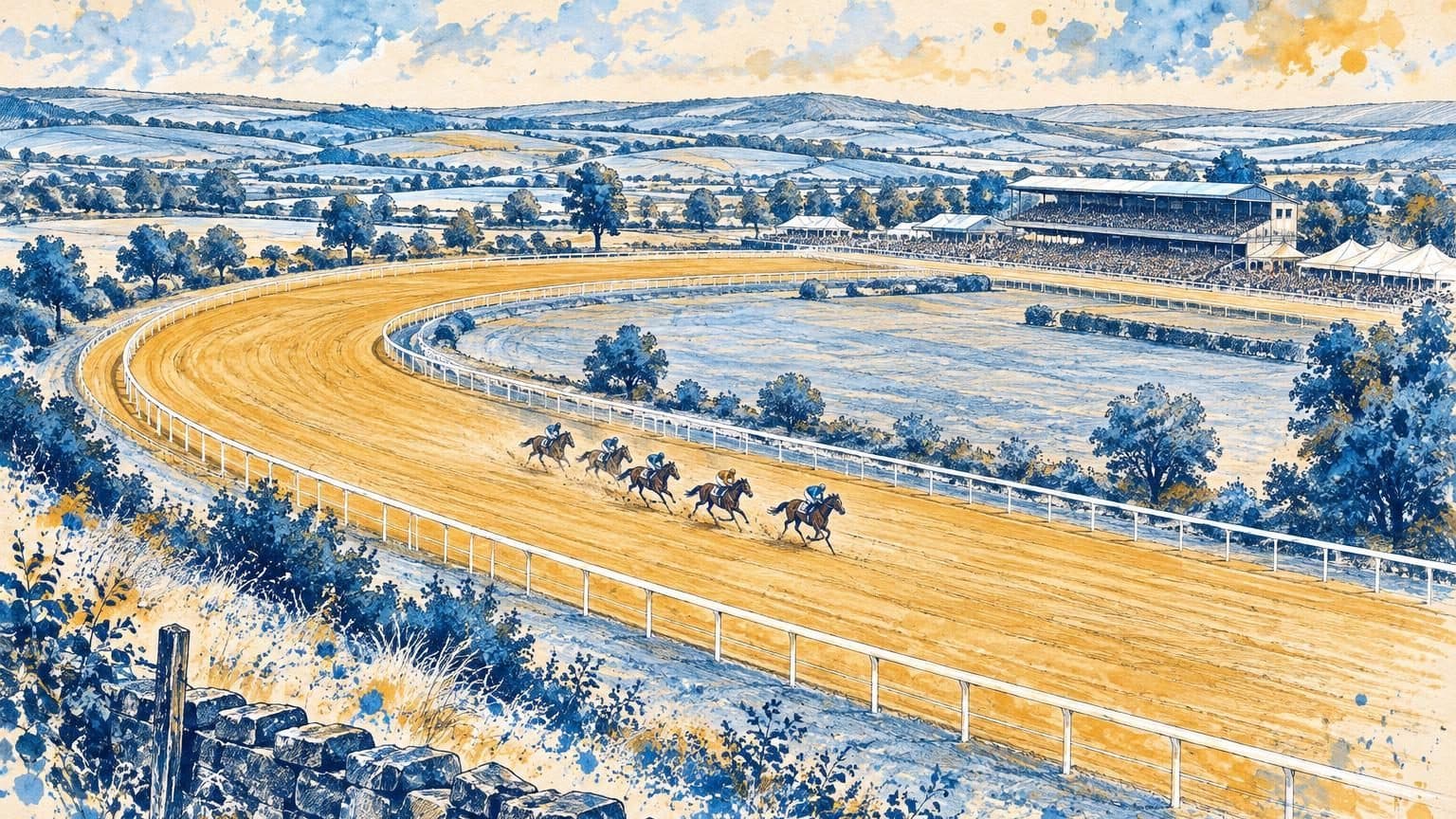
UK courses are built differently. Some are flat and galloping, with long finishes that reward sustained pace. Some are sharp, with tight bends that suit nippy, prominent types. Some climb a hill in the final furlong and ask a stamina question. If you read course details the way the racecard intends, results that “didn’t make sense” start to make more sense.
What do horse racing course details tell you?
Course details describe a track’s shape and demands: direction (left or right handed), how sharp the turns are, the gradient of the finish, the length of the home straight, and the overall character of the track (galloping, sharp or undulating). They hint at which type of horse a course may suit before pace, class or going are added on top. They are context, not a verdict.
What each course detail means
Five details appear in most UK course descriptions, and each one changes how a race can run.
- Direction (left handed or right handed): a horse that has run poorly several times going one way round may simply prefer the other. Trainers sometimes target a switch deliberately.
- Turns: easy, normal, sharp or switchback. Sharp turns tend to reward agile, well-placed runners and punish horses that race wide. Easy bends let long-striding horses keep their rhythm.
- Finish: flat, uphill, downhill or undulating. An uphill finish can drain the late pace from front runners who went too quick. A downhill finish can help a tiring leader hang on.
- Finish distance: the length of the home straight in furlongs. A short run to the line leaves little time to recover from a slow start. A long straight gives held-up horses more time to deliver.
- Track type: galloping, stiff galloping, sharp or undulating. This is the overall feel of the course to ride.
None of these work in isolation. A sharp track with a downhill finish asks a different question from a sharp track with an uphill one.
Galloping, sharp and undulating tracks
Track type is the most useful single word in a course description, because it bundles several of the other details into one label.
Galloping, and stiff galloping. Long straights, easy or normal turns, and a test of stamina. Newmarket and Doncaster are often put in this group. Stiff galloping adds an uphill finish, as at Sandown. The horses that tend to suit are those with a proper engine and a settled, rhythmic stride.
Sharp. Short straights, tight turns, and races that can feel like one continuous decision. Chester is often put in this group. Speed and tactical position count for more, and a wide draw can be costly. If draw is new to you, our guide to draw bias explains how it works.
Undulating. Significant ups and downs across the run, and Epsom is often put in this group. A horse needs balance, and a long-striding galloper can find it hard to change gear when the camber shifts under it.
How course type can shape your reading of form
The most practical use of course details is to question a horse’s previous form, not to filter the card. Two questions help.
First, was the horse’s best recent run achieved at a course that resembles today’s? A strong finish at a sharp, downhill track does not automatically travel to a stiff, uphill one. The geography may have flattered the horse last time.
Second, does today’s track suit the way this horse actually races? A confirmed front runner faces a different race at a galloping track than at a sharp one. Pace reading and going notes should be checked against the course, not assumed to carry across to other venues.
Course details also interact with class. A horse stepping up in class at a stiffer, more galloping track is asking two questions at once: can it handle better opposition, and can it cope with a tougher physical test?
What our data says about course and distance form
“Course and distance winner” is often treated as a near-magical stamp. In an earlier analysis of runners in Great Britain and Ireland from 2013 to 2026, horses with no course or distance win flagged on the racecard won 10.7% of their races, across more than a million runners. Horses flagged as course and distance winners, meaning they had already won at this track over this trip, won 13.8%, across more than 16,000 runners.
Those figures describe that stretch of racing and will not repeat exactly, but the direction is clear: the flag goes with a higher strike rate, which is simply how often a horse wins. Whether it goes with value is a separate question, because a higher strike rate does not tell you whether the price was fair. Our guide to course and distance winners goes into that in more depth.
Course details on their own are best read as context that makes a horse’s record more meaningful, not as a strategy by themselves.
The practical takeaway
Read the course details before you read the form, not after. Decide what kind of test today’s track is likely to set, then look at each horse’s record against that backdrop. A previous run that looked weak on paper may have come on the wrong sort of course. A previous win that looked strong may have been flattered by one.
Course type gives you the shape of the question, and pace, class, going and price help with the answer. Take your time, and enjoy working it out.
If you would like to see this in action, you can open today’s race cards and compare course, distance and class for each race.