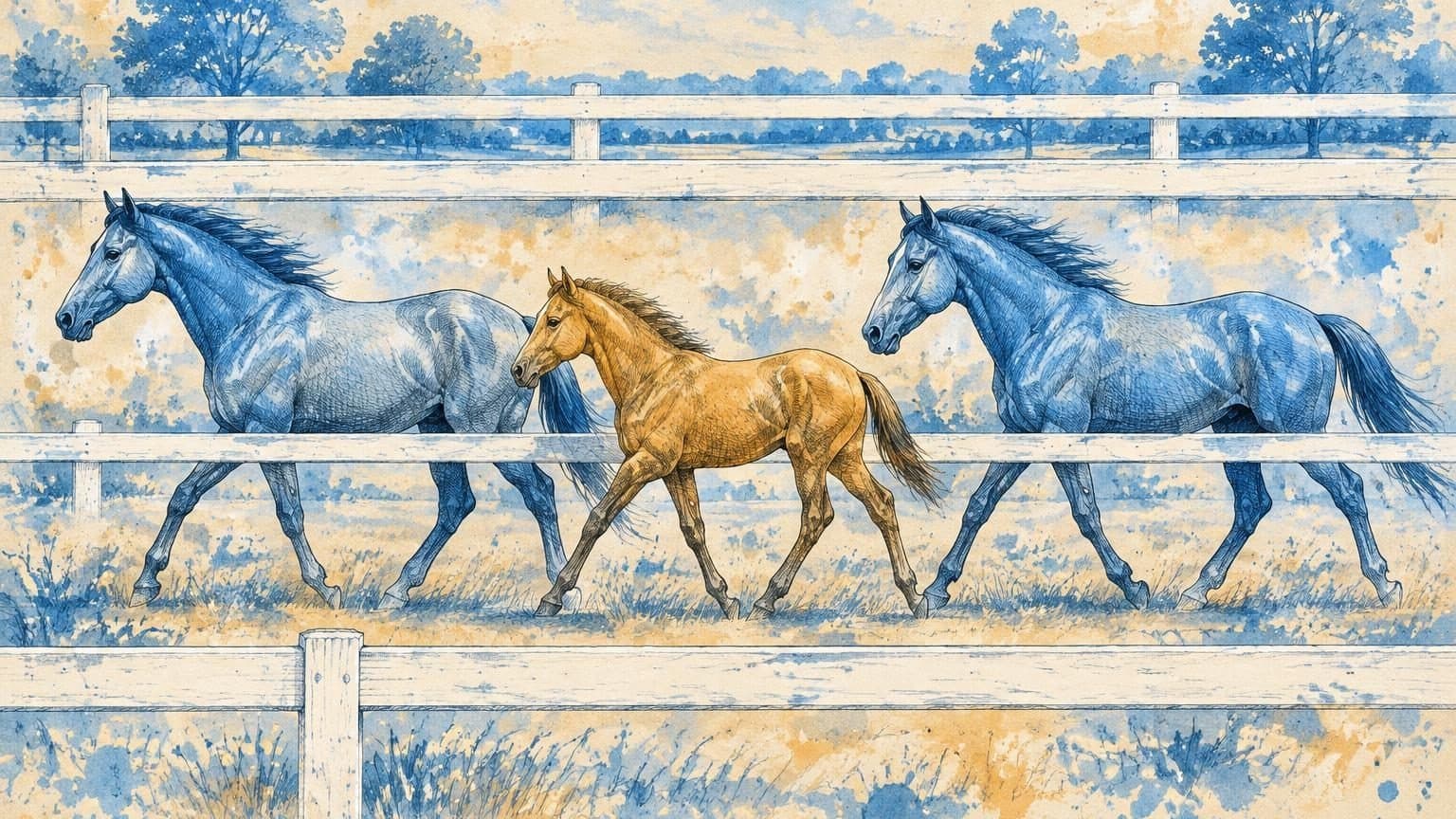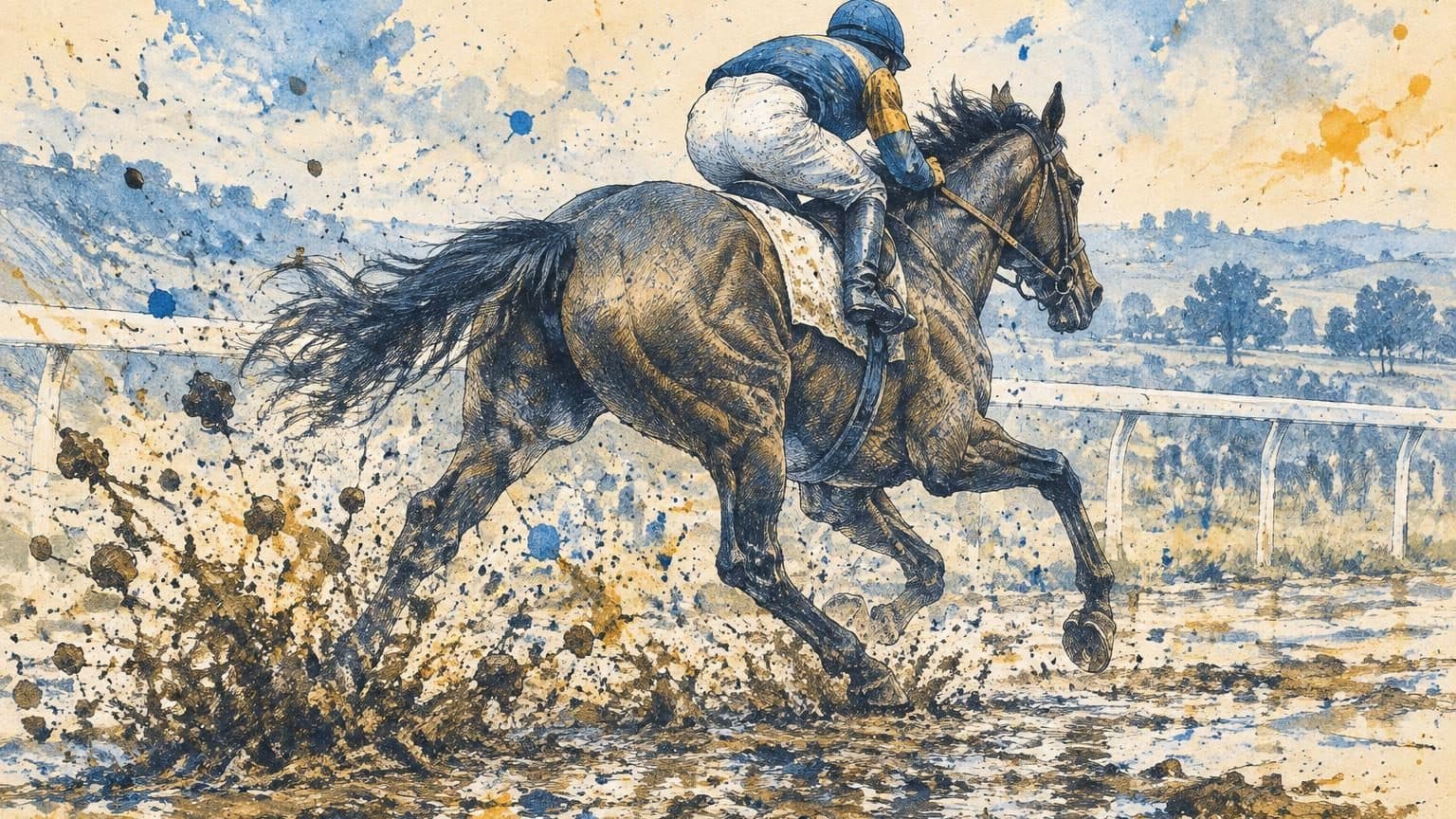
It rained all night and the ground is riding soft. Half the field has been pulled out by trainers who took one look at the forecast and decided it was not the day for their horse. The ones who stayed in are not there by accident. Somebody in each of those yards looked at the same wet ground you are looking at and thought, this suits us.
Most bettors know that an individual horse can either love the mud or prefer a sound surface. Far fewer think one level up. Trainers have ground preferences too, and because a trainer sends out dozens or hundreds of runners a year, a real preference tells you more than a single horse’s does. The skill is telling a genuine preference apart from a lucky few weeks, and then making sure the price is fair once you have found it.
Do trainers have going preferences in horse racing? Yes. Many yards run their horses noticeably better on one type of ground, and possible reasons include their training methods, their gallops and the sort of horse they buy, all of which can suit either soft or fast conditions. Spotting a trainer who has consistently beaten the market on a given going, then only backing their runners at a fair price, is a durable approach.
What is the going, and why does it matter?
The going is simply the state of the ground underfoot. In Britain it runs along a scale from heavy and waterlogged at one end to firm and bone-dry at the other. The official descriptions on a racecard are the rungs on that ladder: Heavy, Soft, Good to Soft, Good, Good to Firm, Firm, and on the all-weather, Standard and its slow and fast variations. Good is the middle, the ground most horses handle. Everything either side of it starts to separate the field.
It matters because ground changes the test. Soft, holding ground turns a race into a stamina contest where tough, galloping types come into their own. Fast ground rewards natural pace and a clean, economical action. That is why the going belongs in the same mental bucket as the trip, the field size and the pace of the race. It is one of the conditions that decides what every other clue is worth.
The numbers add a useful twist. In an earlier Race Advisor analysis of more than 1.5 million British and Irish runners between 2013 and 2026, the going on its own gave no edge. Group every runner by ground and the A/E ratio sat at 1.00 on Good, on Soft, on Heavy, on Good to Firm, on Standard, on every code. A/E means actual winners divided by the winners the odds implied, so 1.00 says a group wins exactly as often as its prices said it should. Our guide to A/E ratios explains it in full. Strike rates do shift with the ground, from around 14.5% on firm down to roughly 8% on yielding, but that reflects field size and race type, and the market has already counted it. Back a horse simply because the ground is soft and you are betting at fair odds.
Here is the part that matters. Because the ground changes the test, it also changes who is suited, and the market does not always price that change perfectly. A horse, or a yard, that the going quietly favours can run at a bigger price than it should, simply because the bare form figures do not point to it.
Why do some trainers love the mud and others want it fast?
The results show the pattern, and the reasons behind it are plausible rather than proven. A trainer whose gallops sit on heavy clay, who works horses up testing hills, may turn out animals conditioned for a stamina test, the sort that relish soft ground. A yard on light, free-draining ground, geared towards speedier, sharper types, may produce horses that want a sound surface to show their best.
Buying policy may add to it. Some yards are known for big, scopey, slow-maturing types that like some give in the ground. Others fill their boxes with quick, early-maturing sorts built for fast going and shorter trips. Over a season those tendencies stack up into a pattern, and the pattern is what you are looking for. You are looking for a trainer whose whole operation tilts one way, rather than one who once won on soft.
This is conditional thinking, and it is the heart of how we read racing. A trainer’s overall strike rate is a broad measure. The same trainer can be a different proposition depending on the ground, the course, the distance or the days since the last run. The useful question is “when is this trainer at their best?” Ground is one of the cleanest answers.
It is worth being precise about where the edge sits. The ground by itself is fully priced, as we just saw. The edge appears when you pin it to a particular yard. A trainer whose operation tilts towards soft can beat the market on soft for years, even though soft ground as a blanket category beats nobody.
How do you spot a real going preference?
The test of a real going preference is whether the runners win more often than their prices said they should, across a sample big enough to trust. Strike rate and last month’s profit are only part of the picture. The A/E ratio is the cleanest measure. When it sits around 1.00, the runners are performing exactly as priced. When it sits meaningfully above 1.00, the group has been beating the market, which is the footprint of an edge.
So when you check a trainer on a particular going, look beyond “they had a few winners”. Look at the price the winners came at, look across several seasons rather than one, and note how many runners the record is built on. A trainer who shows an A/E comfortably above 1.00, such as 1.05 or higher, on soft ground over hundreds of runners and several years is showing you something durable. The size of the sample matters as much as the number itself, because a figure that holds over hundreds of runners is far harder to produce by luck. A trainer who looks brilliant on heavy ground off a couple of dozen runs has a sample too small to read, because it swings with one or two results either way.
Here is what clearing the bar looks like in the real numbers. These three are examples chosen for their long records, not tips, and they come from the same earlier analysis, from 2013 to 2026. They describe that period rather than promise what comes next.
- G and J Moore on soft ground. More than 1,680 runners, a 15.8% strike rate and an A/E of 1.18, and the pattern held in 13 of the last 14 seasons rather than resting on one hot year.
- Kevin Ryan on good to soft. More than 1,090 runners at an A/E of 1.13, with a profit at Betfair SP, which is Betfair Starting Price, the exchange’s closing price.
- Ralph Beckett on good to soft. More than 880 runners at an A/E of 1.14.
Hundreds of runs, several seasons, and winners landing at bigger prices than the market expected. Across the whole dataset only a minority of trainer-and-going pairings cleared that bar, which shows how much rarer a real preference is than the forums suggest. It also shows why the checks matter: most apparent preferences are best treated as leads to test.
Sample size is the other half of the skill. Charlie Appleby’s runners on heavy ground number just 61 across 13 years, only five to eleven a season, and on that thin evidence the yearly strike rate moves from 12.5% up to 36.4% and back, purely because of which season you pick. A dozen runs can support almost any story. The rare-going version is just as tempting. Charlie Hills on genuinely firm ground shows a 29.1% strike rate and an A/E of 1.42, which looks superb, until you see it rests on only 79 runners in 13 years because firm ground is uncommon in Britain. Even if an edge like that is real, the going turns up so rarely that you would use it a handful of times a year. A genuine preference shows up on a going that actually happens, over enough races that a single good Saturday cannot explain it. Weight of evidence first, story second.
How do you turn a going preference into a bet?
Finding a trainer who loves the mud is the first half. The second half is price discipline, because a preference is a filter, not a buy signal. Once an angle is well known, the price shortens, and a fancied runner from a famous soft-ground yard on testing ground can be sent off too short to be worth backing. The work has been done by the market too, and the value has gone.
So treat the going preference as the thing that puts a horse on your shortlist, then make the price earn the bet. The question is always the same: is this horse bigger than its true chance? A well-suited runner from the right yard, on its favoured ground, at a price the crowd has overlooked, is a bet. The same runner at a short, obvious price is one to watch. That gap, between a horse you like and a horse that is real value, is where the edge lives.
Do not bet a rare going just to use your homework, and keep the rest of the race in view. The going sits alongside the trip, the class, the pace and the track quirks. It is one strong piece of a bigger picture. Layer it in, and pass when the price does not fit.
What is the takeaway?
Trainers do have ground preferences, and the genuine ones are found through volume, consistency and the A/E ratio rather than a handful of winners. The preference gets a horse onto your shortlist, and the price decides whether it becomes a bet. No approach can promise a profit, and this one gives you a sound, testable way to look for edges that hold up.
Next time the rain comes down and the going changes, ask which yards are built for it, then look for the one the market has underrated. Once you have checked a yard’s record on the going, open today’s race cards to see which of its runners meet the conditions it likes, and keep a record of how those selections run. Our guide to the trainer and jockey course record shows the same approach applied to courses. Over a wet winter, your own record is what turns a hunch about the ground into something you can check.