Last updated: 14 June 2026
You back a horse on Friday night. It looks the part on the form, the price is fair, you are happy. Then it rains all night in the West Country, the ground goes from good to soft by the first race, and your horse, who has only ever run on a sound surface, trails in down the field looking like it hated every stride. You did nothing wrong with the form. You just ignored the weather.
Most backers treat the weather as background noise. It is not. It is one of the few things that can quietly rewrite a race after you have already done your thinking. The trick is knowing exactly how it does that, because the answer is more useful, and more specific, than “it was wet”.
How does weather affect horse racing?
Weather affects horse racing mainly through the going, the official description of how soft or firm the ground is. Rain softens the surface and slows the race; dry spells firm it up and speed it up. The bet that matters is not the weather forecast but whether each horse handles the ground it is about to run on.
The weather is not the signal. The going is.
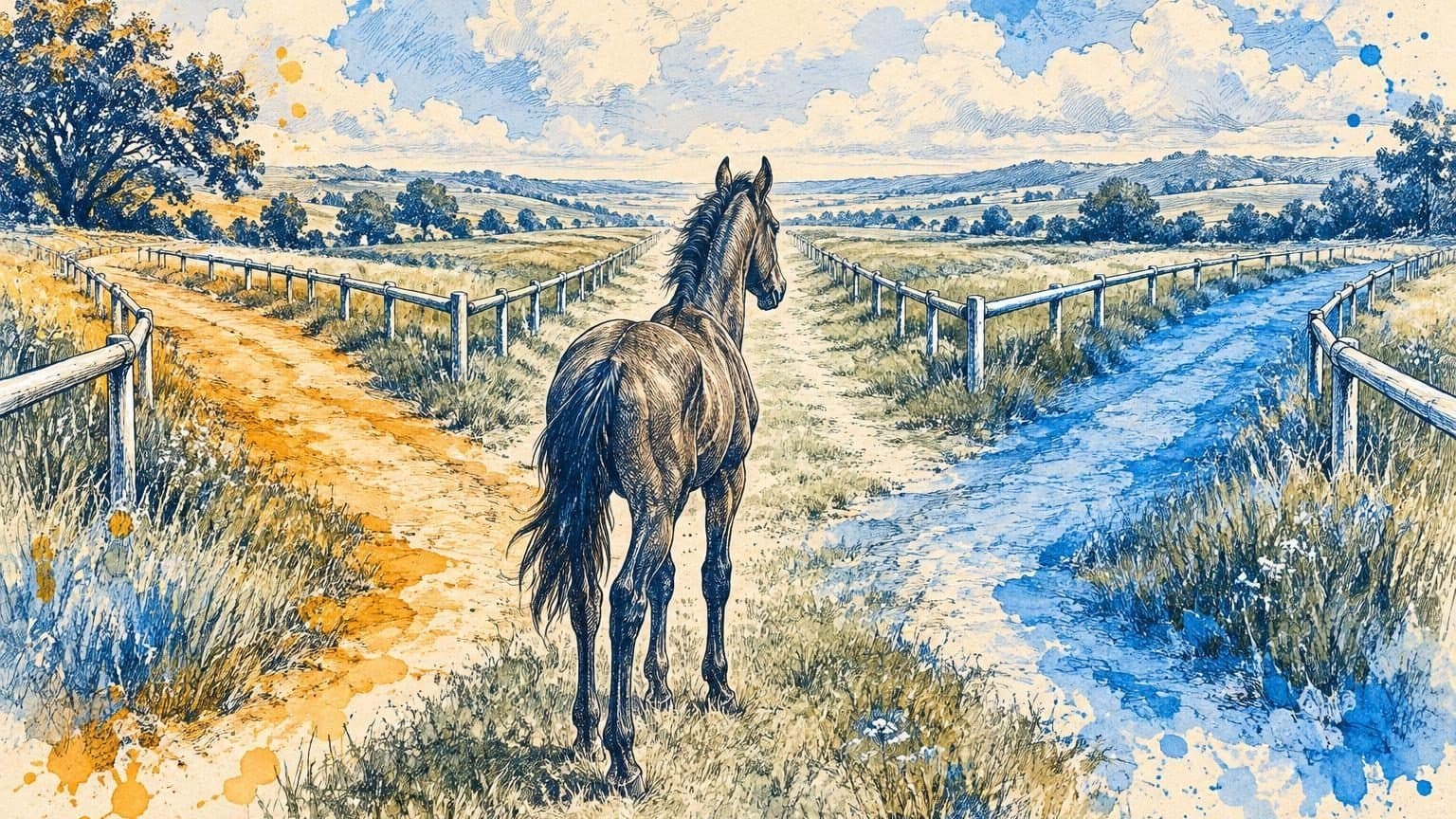
Here is the mental shift that turns weather-watching into something you can actually bet on. You are not trying to predict rain. The clerk of the course does that for you, and the result is published as the going.
The going is the bridge between the weather and the race. A week of rain does not affect a horse directly. It affects the ground, the ground is graded into a going description, and that going is the thing the horse runs on. So you can leave the barometer alone and read one line on the race card instead. When you hear someone say a horse “wants cut in the ground” or “needs it to dry out”, they are talking about the going, not the sky.
This is also why all-weather racing behaves so differently. The whole point of those surfaces is to take the weather out of the equation, so the going stays in a narrow band whatever the sky is doing. On turf, the weather is in charge. That is the world this article is about.
What soft, good and firm ground actually do to a race
British turf going runs along a scale. From wettest to driest, the usual descriptions are Heavy, Soft, Good to Soft, Good, Good to Firm and Firm. Good is the middle, the surface most horses handle comfortably. The two ends are where races get reshaped.
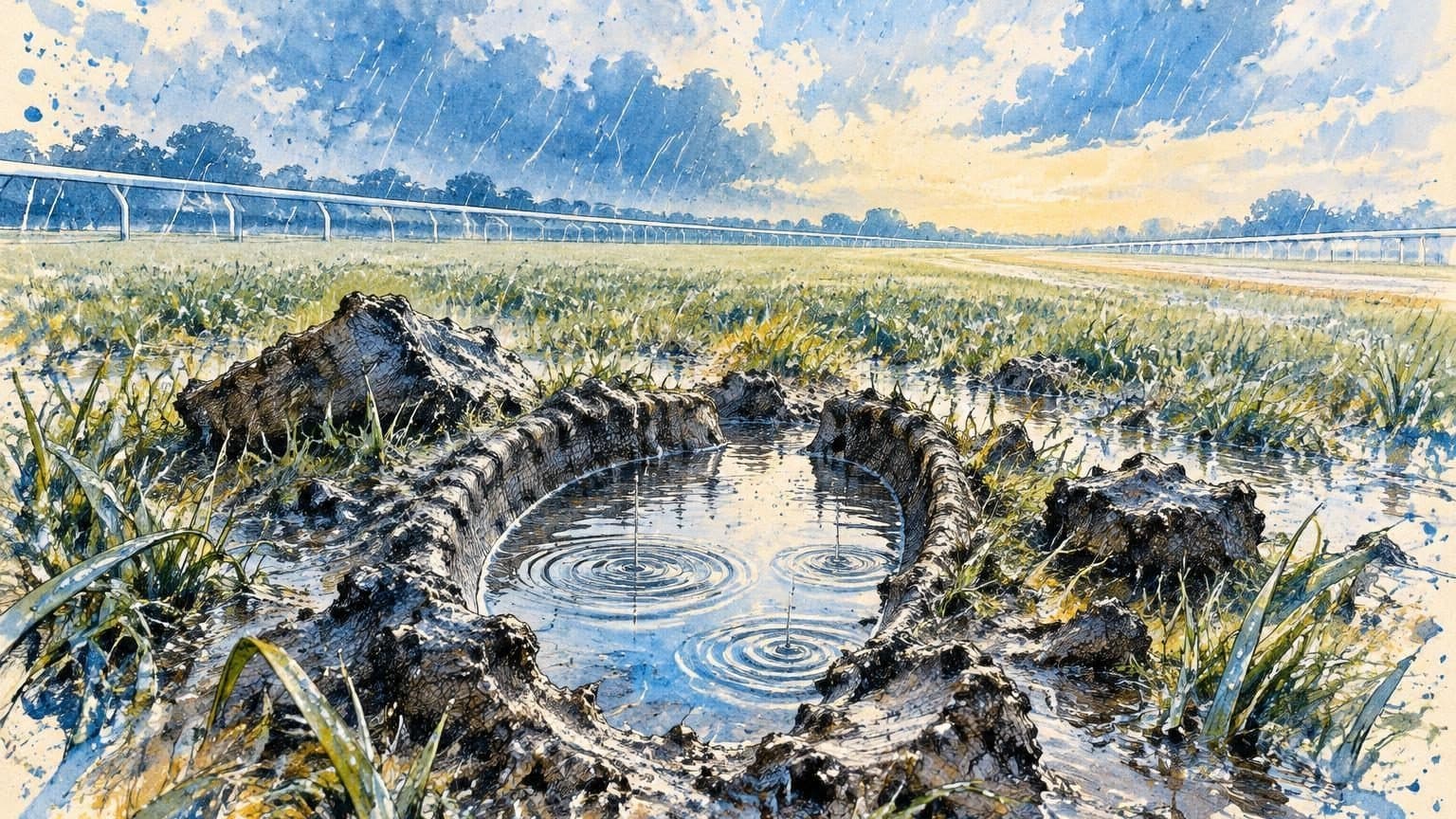
On soft and heavy ground, the surface holds the horse back. Every stride costs more effort, finishing times lengthen, and the race becomes a test of stamina and strength as much as speed. Horses that float over fast ground can labour badly in the mud, while strong, relentless gallopers who would be outsprinted on a quick surface suddenly look unstoppable. The whole complexion of the race changes, and the fast finish you were relying on may never arrive.
On firm and good to firm ground, the opposite happens. The surface gives the speed back. Races are run faster, the emphasis shifts toward natural pace and a turn of foot, and a slogger who needs to grind his rivals into the ground never gets the chance. Some horses simply do not enjoy the jar of fast ground and will tell you so by running flat.
None of this is exotic. It is the single biggest environmental filter in the sport, and it sits in plain sight on every race card. The reason it still catches backers out is that they read the going, nod, and then bet as if it were not there.
Why the going matters more than the favourite
The original version of this piece, written years ago by a guest writer, eventually stumbled onto the one genuinely useful idea in it: on a wet, sloppy day, it is often a mistake to back the favourite, and smarter to look at the horse that has proven it goes well in those conditions. That instinct is right. It is worth taking seriously and tightening up.
Think about what a favourite actually is. It is the horse the market rates most likely to win on the balance of its overall form, most of which was probably built on good ground, because good ground is the most common going in British racing. When the rain comes and the going turns soft or heavy, a chunk of that form becomes less relevant. The favourite may never have proven it handles the conditions it is about to face. The market knows the going too, but it does not always discount the favourite fully, because the habit of backing the top of the market is strong.
That is the gap. A favourite stepping onto ground it has not shown it wants is a weaker proposition than its price suggests, and a horse with genuine, proven soft-ground form sitting at a bigger price can be the value. This is not a reason to lay the favourite blindly every time it rains. It is a reason to ask, every time the going moves to an extreme, whether the favourite has actually done it on this surface, and whether someone further down the market clearly has.
The same logic applies to connections. Some yards and some trainers with a clear ground preference aim their horses at specific conditions and win far more than their share when the going comes right for them. Jumps backers see this most clearly in soft-ground chase handicaps, where a stamina-laden type from the right stable can outclass flashier rivals the moment the ground goes against them.
How to read the going on a race card
You do not need to become a meteorologist. You need a short, repeatable check that you run on every horse you are serious about backing, especially when the going is at either end of the scale.
First, read today’s going, then look at where each horse has actually performed. Has it won or run well on this surface before, or is its good form all on a different kind of ground? A horse with a soft-ground win on its record is a known quantity in the mud. A horse whose best runs are all on good to firm is a question mark the moment it rains, however good it looks on paper. When reading a horse’s form, treat the going beside each past run as part of the result, not a footnote to it.
Second, respect the unknown. A horse that has never run on heavy ground is not automatically unsuited to it, but it is unproven, and unproven is a risk you should be paid for. If the price does not reward that uncertainty, pass. Some horses relish conditions they have never seen, and some hate them, and you find out for free by watching rather than betting blind.
Third, watch for the swing. The most dangerous going is the going that has just changed. Overnight rain that turns good ground soft, or a drying wind that firms a soft track up before the later races, can leave the morning’s form study out of date. If the going has moved since you did your thinking, do your thinking again.
The honest way to test a going angle
Here is where most “soft-ground horse” theories quietly fall apart. It feels obvious that a proven mudlark on soft ground should be a profitable bet. But the market can see the going just as clearly as you can, and it prices the obvious specialists accordingly. A horse that everyone knows loves the mud is rarely a price worth taking in the mud.
So winning more often is not the same as making money. The only test that settles it is actual versus expected, the A/E ratio. You compare how often a group of horses actually wins against how often their prices implied they should win, measured against Betfair SP. A figure of 1.00 means the group is exactly market-fair: the wins are real but the prices already paid for them, so there is no profit in it. Above 1.00 means the group beats its prices and there may be an edge. Below 1.00 means you are overpaying.
Run that test on going, and the answers are sharper than the folklore. Race Advisor’s analysis of more than 1.4 million UK and Irish runners between 2013 and 2026, with the going attached to every one of them, lays it out cleanly. Across the field as a whole, the going barely moves the dial on its own. Actual versus expected sits in a tight band between 1.00 and 1.10 whatever the surface. What movement there is runs one way. The soft end of the scale edges above market-fair, with heavy ground at 1.10 across more than 76,000 runners, soft at 1.08 across more than 188,000, and good to soft at 1.07. The firmer, more standard surfaces sit flat on their prices, with good to firm at 1.01 and the all-weather standard surface at exactly 1.00. The edge, such as it is, lives on the easy side of good.
The favourite question is the one that really surprises people. The old instinct says lay the jolly when the heavens open. The numbers say the opposite. On heavy ground the favourite wins 37.7% of the time at an A/E of 1.08, and on soft it wins 35.7% at 1.08, both comfortably ahead of their prices. On the all-weather standard surface the favourite wins just 32.8% at an A/E of exactly 1.00, market-fair to the penny. Far from collapsing in the mud, favourites as a group hold up better on testing ground, not worse. Laying them blindly because it rained would have cost you money.
That is why the blunt rule fails and the method holds. The going edge is real but small and directional, and it does not live in lazy shortcuts like backing every mudlark or laying favourites on sight. It lives in the individual horse. Read the going, judge whether this runner has actually proven it handles it, and let actual versus expected tell you whether the angle is value or just a nice-sounding story.
The weather, in the end, is not a mystery to be predicted. It is information that arrives as the going, and the backers who profit from it are simply the ones who read that line on the card and then check whether the horse, and the price, actually stack up. Pull up today’s racecards, look at the going before you look at anything else, and use our free Bet Tracking tool to keep an honest record of how your ground-based selections really perform. Do that for a season and you will stop being surprised by the rain.